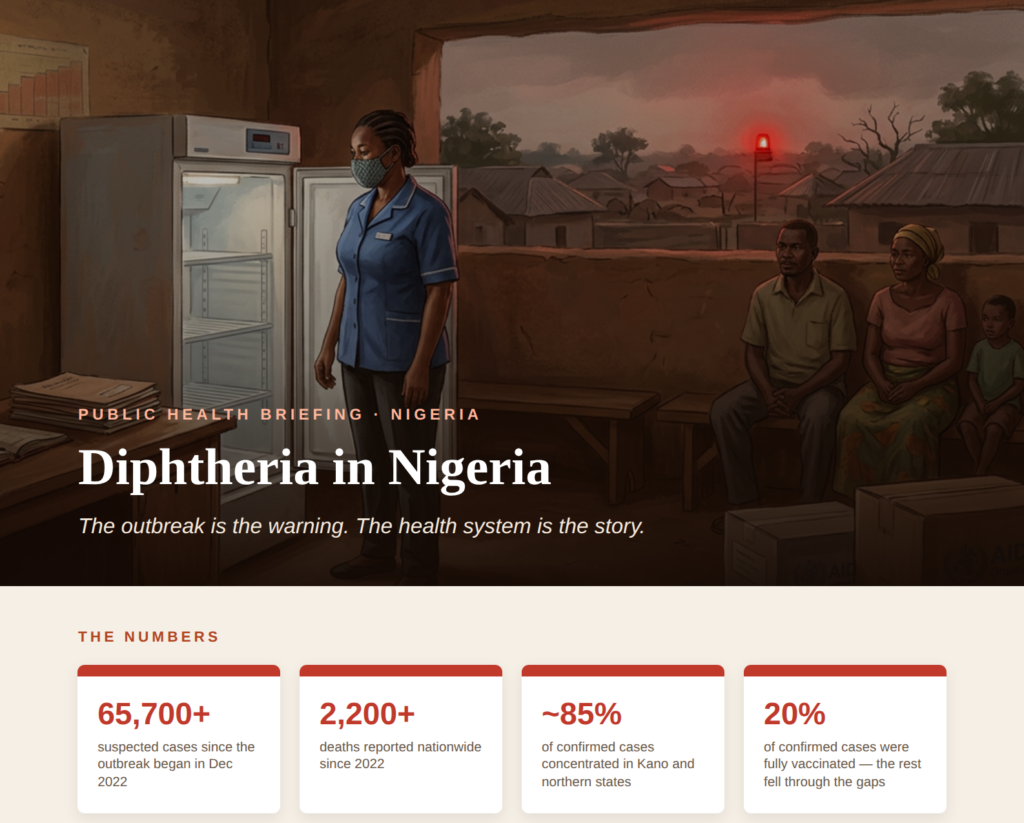

Enacted in 2014, Nigeria’s National Health Act (NHA) serves as a foundational legal framework for the regulation, development, and management of the nation’s healthcare system. Its primary objective is to ensure that all Nigerians have access to quality healthcare services, with a particular focus on vulnerable populations, thereby strengthening the overall health system.
Key Provisions of the National Health Act
- Basic Healthcare Provision Fund (BHCPF):
- Establishes a dedicated fund to support the provision of essential healthcare services.
- Financed through federal allocations, grants, donations, and other sources.
- Allocated to states for healthcare infrastructure, essential medicines, and operational costs of primary healthcare facilities.
- Patient Rights:
- Ensures access to basic healthcare services for all citizens.
- Guarantees rights to privacy, informed consent, and access to personal health information.
- Government Responsibilities:
- Mandates shared responsibility among federal, state, and local governments for healthcare service availability.
- Tasks governments with regulating and standardizing healthcare delivery nationwide.
- Health Information Management:
- Requires the establishment of a national health information system to facilitate data-driven decision-making in healthcare.
- Health Services Regulation:
- Provides guidelines for the operation and management of health facilities.
- Outlines licensing requirements for health professionals and quality assurance measures in service delivery.
- Public Health and Emergency Preparedness:
- Supports initiatives to address public health emergencies, disease outbreaks, and epidemics.
- Private Sector Participation:
- Encourages partnerships between public and private sectors to enhance healthcare delivery.
- Health Research and Innovation:
- Promotes research and innovation to tackle health challenges and improve service delivery.
Significance of the National Health Act
- Enhanced Funding: The BHCPF provides a reliable financial mechanism to bolster primary healthcare services.
- Equitable Access: Aims to reduce disparities in healthcare access, especially for underserved populations.
- Accountability and Regulation: Establishes standards to ensure transparency, accountability, and quality in healthcare delivery.
- Health System Strengthening: Offers a coordinated framework for collaboration among various levels of government and stakeholders in the health sector.
The NHA is instrumental in addressing systemic challenges within Nigeria’s healthcare system and advancing the goal of universal health coverage (UHC). However, its full impact is contingent upon effective implementation, adequate funding, and robust oversight mechanisms.