
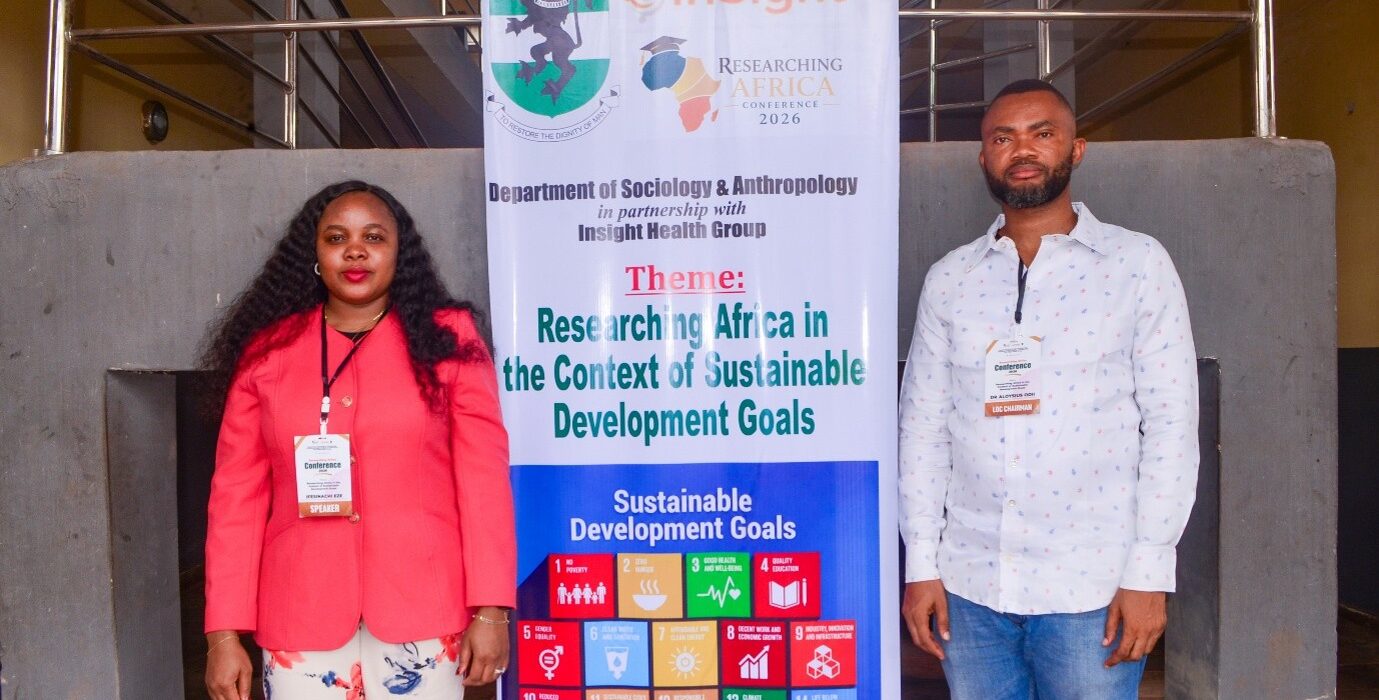
InSight Health Group was pleased to collaborate with the Department of Sociology and Anthropology at the University of Nigeria, Nsukka, to host the Researching Africa Conference 2026, held under the theme “Researching Africa in the Context of the Sustainable Development Goal.” The conference took place from 20–21 May 2026, with a pre-conference workshop held on 19 May 2026, bringing together scholars, researchers, students, practitioners, and development stakeholders to reflect on Africa’s development realities through the lens of research and the Sustainable Development Goals.
The conference provided an important opportunity to listen, learn, and reflect on how African research can speak more directly to African problems. The sessions demonstrated that development challenges across the continent are not isolated. Health, poverty, gender inequality, insecurity, climate change, education, and weak institutions are deeply connected, and meaningful solutions require evidence that is locally grounded, interdisciplinary, and responsive to lived experiences.
Figure 1: Courtesy call to the Vice Chancellor, University of Nigeria, Nsukka
Rethinking Development from an African Lens
One of the strongest messages from the conference came from Dr. ChiChi Aniagolu, the keynote speaker, whose presentation, “Beyond the Blueprint: A Sociological Analysis of the SDG Development Paradigm,” challenged participants to think critically about the Sustainable Development Goals (SDG). Her paper reminded the audience that the SDGs are should not be treated as a simple checklist of global targets, but as a development framework that must be interrogated within Africa’s historical, political, economic, and social realities.
A key takeaway from the presentation was that development is not neutral. While the SDGs provide a useful global language for measuring progress, they also carry assumptions about growth, modernization, markets, and what societies should aspire to become.
Furthermore, she highlighted the contradictions within the SDG framework, especially where economic growth, environmental protection, poverty reduction, and decent work do not always move in the same direction.
For InSight Health Group, this was an important reminder that evidence-based development must also be justice-based. Research should not only ask whether targets are being met; it should also ask who benefits, who is excluded, and whether development models are rooted in local realities.
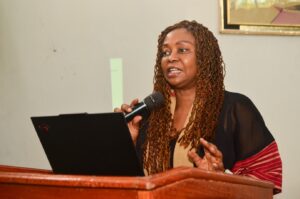
Figure 2 Presentation by Dr ChiChi Aniagolu, Ford Foundation
Health Systems as Foundations for Sustainable Development
The presentation by the guest speaker, Prof. George Ugwu, Honourable Commissioner for Health, Enugu State, provided a practical example of how state-level health reforms can contribute to the SDGs. His presentation, “Strengthening Healthcare for Sustainable Development,” outlined Enugu State’s ongoing reforms across primary, secondary, tertiary, and emerging quaternary healthcare.
This presentation shows that healthcare infrastructure is not only about buildings. It is about access, workforce, quality of care, referral systems, emergency readiness, data, trust, and continuity of services. The Enugu example showed how investments in health systems can contribute to the SDG.
For us at InSight Health Group, we believe that strong evidence is needed to track whether infrastructure investments translate into better service use, improved quality of care, reduced out-of-pocket expenditure, and better health outcomes for communities.
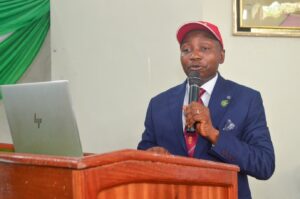
Figure 3 Presentation by Prof. George Ugwu, Commissioner for Health, Enugu State
Artificial Intelligence and Africa’s Development Future
The lead paper 1 by Prof. Chukwuedozie K. Ajaero, titled “Artificial Intelligence and the Sustainable Development Goals in Africa: Opportunities, Risks, and Governance Challenges,” expanded the conversation into the future of technology and development. His presentation explored how artificial intelligence can support progress across the SDGs, while also warning that Africa must not become only a consumer of technologies designed elsewhere.
The presentation highlighted opportunities for AI in health diagnostics, education, public service delivery, climate adaptation, data systems, and economic innovation. It also emphasized the growing AI ecosystem in Africa, including investments, talent development, business adoption, and emerging national AI strategies.
However, the presentation also raised important governance concerns. These included weak policy frameworks, ethical risks, algorithmic bias, inadequate data infrastructure, regulatory lag, limited technical capacity, funding constraints, and the exclusion of marginalized groups from AI policy discussions.
For InSight Health Group, this presentation was particularly relevant because health systems, clinical research, monitoring and evaluation, and community programmes increasingly depend on data and digital tools. AI has the potential to improve decision-making, but only if it is governed responsibly, locally adapted, ethically deployed, and designed to reduce rather than reproduce inequality.
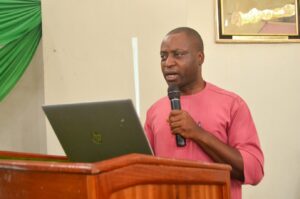
Figure 4 Presentation by Prof. Chukwuedozie K. Ajaero, University of Nigeria, Nsukka
Mental Health as an SDG Investment
The lead paper presentation by Dr. Nnenna Mba-Oduwusi, delivered by Ifesinachi Eze, brought the discussion directly into InSight Health Group’s work in mental health. The presentation, “How InSight Health Group is Bridging the Gap in Access to Mental Health Care: An SDG Investment,” highlighted the toll-free mental health hotline system implemented through the InSight Initiative for Health and Development in collaboration with the Suicide Research and Prevention Initiative Nigeria (SURPIN).
The presentation showed that mental health is deeply connected to the SDGs. It affects health and well-being, poverty, education, productivity, inequality, peace, and social resilience. It also drew attention to the scale of the mental health challenge, including suicide, limited access to specialist care, and the shortage of mental health professionals in Nigeria. The hotline model presented at the conference demonstrated how a practical, technology-enabled, confidential support system can help close access gaps.
For InSight Health Group, the key lesson was clear: mental health is not a side issue in sustainable development. It is central to human dignity, productivity, education, family stability, community peace, and health system strengthening. The session also showed the importance of turning service delivery data into research evidence that can inform policy, improve quality, and strengthen national mental health response systems.
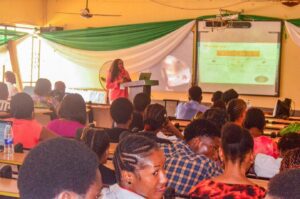
Figure 5 Ifesinachi Eze presents on behalf of Dr Nnenna Mba-Oduwusi, InSight Health Group
Lessons from the Parallel Sessions
Beyond the keynote and lead presentations, the parallel sessions showed the depth and diversity of research being conducted across SDG-related themes. Papers addressed health system inequalities, social support for older adults, suicidal ideation among university students, patient narratives, substandard drugs, diabetes treatment barriers, reproductive health, telehealth, gendered violence, poverty, insecurity, climate change, education, corruption, workplace structures, and social protection.
A major learning point was that Africa’s development challenges are interconnected. Health cannot be separated from poverty. Gender cannot be separated from work, politics, family systems, and health outcomes. Security cannot be separated from economic life and community trust. Climate change cannot be separated from livelihoods, migration, urban planning, and public health.
The conference, therefore, reinforced the need for interdisciplinary research. Solving Africa’s development challenges requires sociologists, public health experts, economists, clinicians, policymakers, technologists, community actors, and development practitioners to work together.
Key Reflections for InSight Health Group
From InSight Health Group’s perspective, the conference offered five important reflections.
- First, African research must be grounded in African realities. The conference repeatedly showed that imported frameworks must be questioned, adapted, and interpreted through local experience.
- Second, health is a development anchor. Whether the discussion focused on PHCs, mental health, reproductive health, ageing, health workforce, or emergency response systems, it was clear that strong health systems are essential for achieving multiple SDGs.
- Third, mental health must be treated as a core development issue. The InSight/SURPIN hotline example demonstrated that scalable, confidential, and quality-assured mental health support can help bridge major access gaps.
- Fourth, technology must be governed with equity in mind. AI and digital health tools can strengthen systems, but without strong governance, they can widen existing inequalities.
- Finally, partnership is essential. The collaboration between InSight Health Group and the Department of Sociology and Anthropology, University of Nigeria, Nsukka, demonstrated the value of linking academic institutions with implementation-focused organisations.

Figure 6 Group photographs
Conclusion
The Researching Africa Conference 2026 was a timely and important gathering. It created space to question dominant development models, showcase practical reforms, discuss emerging technologies, and highlight community-centred health and social research.
For InSight Health Group, participating as a collaborator reaffirmed our commitment to evidence generation, health systems strengthening, mental health access, responsible innovation, and Africa-led development solutions.
The most important lesson from the conference is that researching Africa must go beyond describing Africa’s problems. It must help shape fairer systems, stronger institutions, better health outcomes, and more inclusive futures.
As Africa continues to work toward the SDGs, conferences like this remind us that progress will depend not only on targets and indicators, but on context, collaboration, and a clear commitment to improving lives.

